The work

Every project here follows the same structure: what the client needed, how I approached it, and what happened.

Havelow is a new studio, so the list is short. Client projects come first; concepts are labelled as concepts. New work is added as it launches.

  1. The Korean House

    The ask

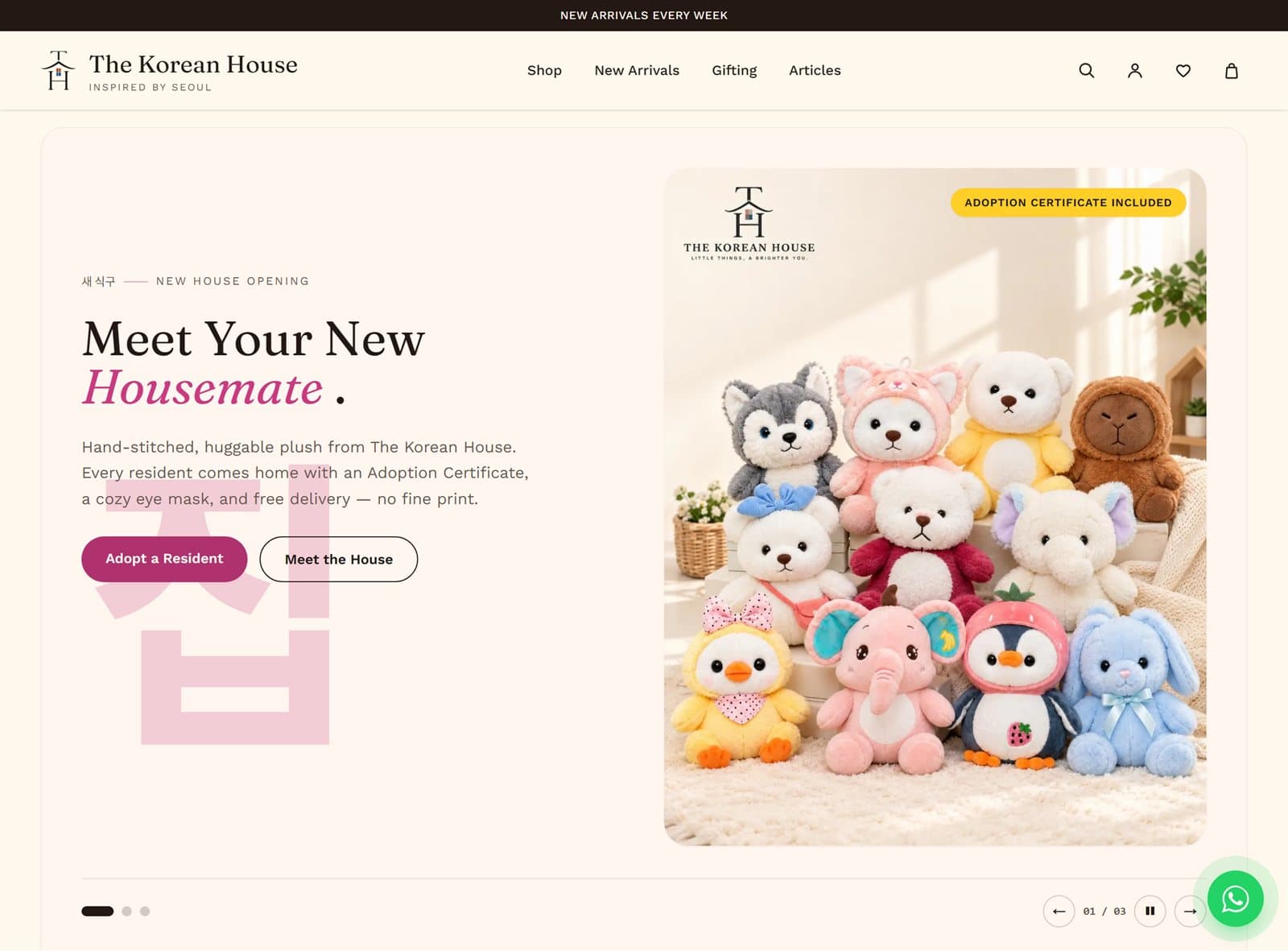
    The client was using an AI app-builder site that looked good visually but wasn't production-viable. Carts and wishlists only lived in the browser, there was no real admin panel, and no real payment capture. They needed a custom, production-grade rebuild that kept their exact UI/branding, but introduced a real database, admin dashboard, secure Razorpay checkout, and automated order notifications.

    The approach

    Built a full-stack monorepo featuring a Next.js (App Router) storefront to improve SSR/SEO and an Express (TypeScript) REST API. Replicated the original visual design flawlessly using Tailwind CSS. Swapped their unreliable storage for PostgreSQL and Prisma to guarantee transactional integrity (never overselling stock) and integrated Razorpay for real payments alongside Resend for automated email alerts.

    The outcome

    Replaced an unreliable app-builder site with a production-grade custom Next.js storefront and secure payment system.

    Shipped a robust MVP that replaced their mock frontend with a scalable, production-ready system. The client now has full control over their catalog and site settings via a custom admin panel, secure checkout flows, and reliable stock and order management.

  2. Tao Architecture

    The ask

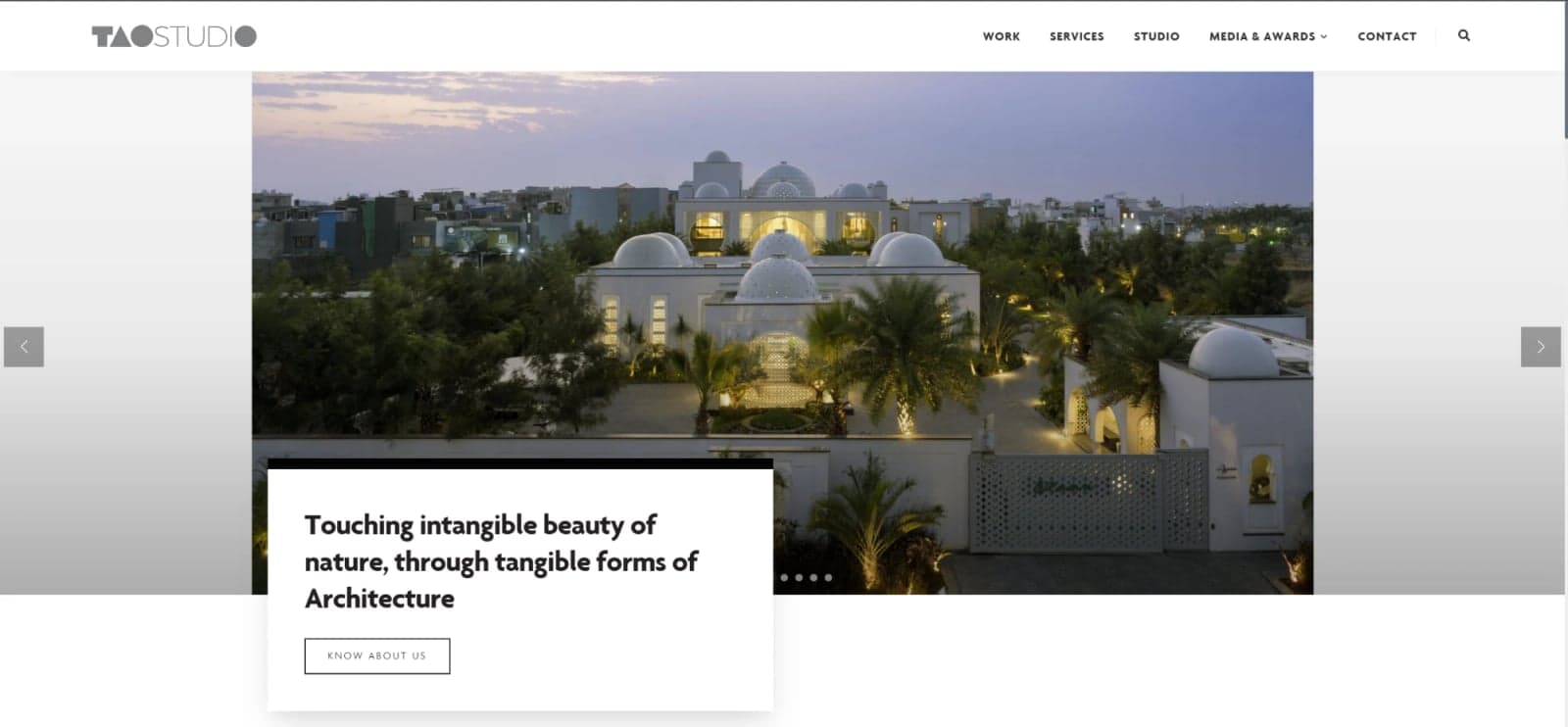
    Tao Architecture's previous website was hand-coded PHP (jQuery, Bootstrap 3 and a MySQL database), uploaded by FTP. It looked dated, didn't adapt properly to phones and tablets, and was slow to load. Every project had its own PHP file and all the text and photos were written into the code, so even a small change meant relying on a developer. The only admin was a basic panel for job applications. The studio, led by principal architect Manish Banker and known for sustainable villas, corporate offices and eco-sensitive resorts, needed a modern website that its own team could keep up to date.

    The approach

    Rebuilt the site from scratch as two connected parts. The public site is Next.js and React with Tailwind, organised around how clients size up an architect: Work (with a category filter), Services, Studio, a Media section for awards, publications and videos, and Career. Every project now uses one shared page template, with its content stored in a PostgreSQL database instead of a separate file per project. A separate Express API with Prisma talks to that database, and photos are stored on Cloudinary, which resizes each image for the visitor's browser. Both parts run on Vercel, and every change goes through a staging site and automated tests before it reaches the live one. Then built a custom admin panel, so the studio's team can update the site from a phone, tablet or desktop, wherever they are.

    What visitors get

    • Project pages with a photo gallery, lightbox, captions and related projects
    • A full-screen search that also looks inside project descriptions
    • A Videos page that updates itself from the studio's YouTube channel once a day
    • Privacy Policy and Terms of Use pages, with consent on the forms
    • Clean page addresses, proper page titles, link previews and a sitemap for search engines

    What the studio's team can do in the admin panel

    • Publish and edit projects with a rich-text editor: reorder gallery photos, add captions, pick related projects and preview before publishing
    • Choose which part of a photo each project card shows
    • Edit the home page: hero slides, banner text and the category grid
    • Add or edit studio members, awards, publications, services and page intros
    • Update contact details, social links and the footer tagline
    • Read contact messages, forward each one to the right person, and review job applications, giving each a status; applicants' files stay private
    • Give each admin access only to the sections they need, with one master admin managing the accounts and seeing an activity log of who changed what

    The outcome

    From hand-coded PHP pages to a Next.js platform with a database and a custom admin panel: the studio updates its own site from any device, no developer needed.

    The studio now runs its own website: projects, the home page, the team, awards, enquiries and job applications are all handled in the admin panel, without waiting on a developer. Sign-in protection, private applicant files and a staging-first release process were added too; none of that existed on the old site. The site is live at taoarchitecture.com and scores 81 / 100 (Bright) on Havelow's own health check with no failures: valid HTTPS, canonical tag and structured data, a clean heading structure, every image described and every link working.
  3. Parth Sarthi Tours & Travels

    The ask

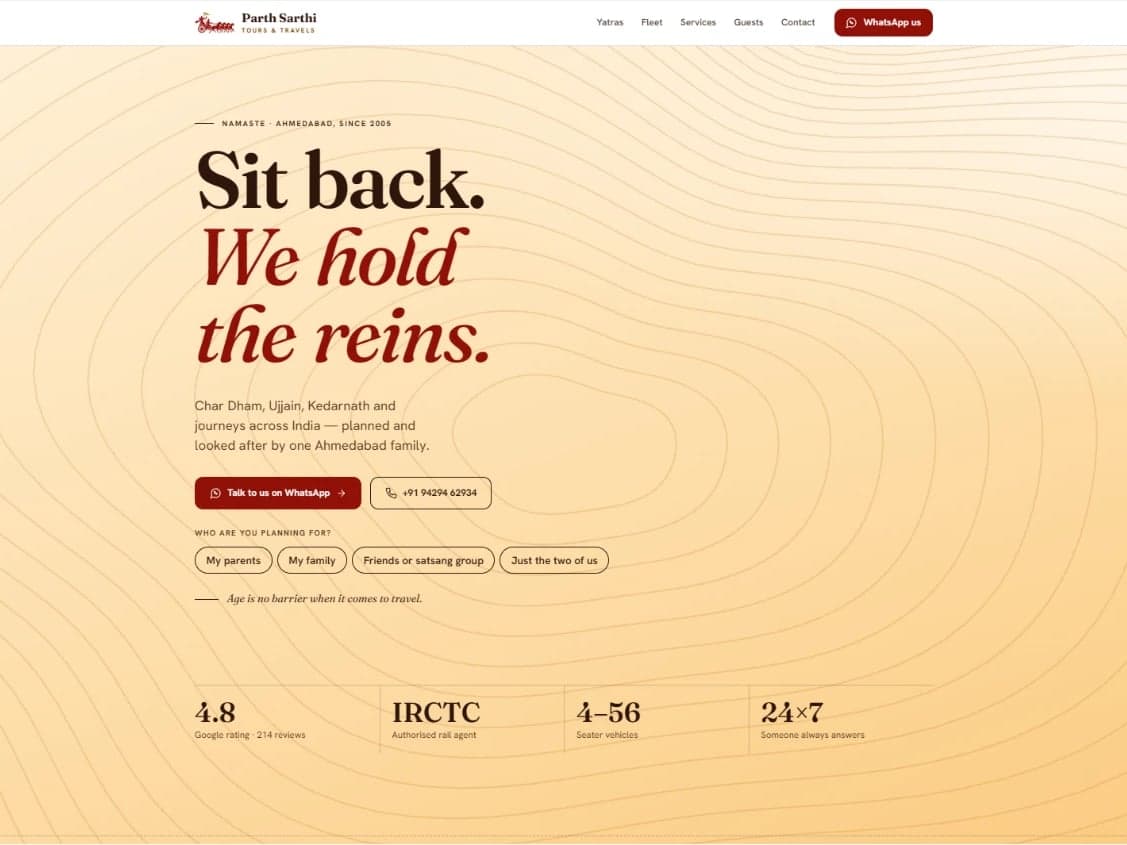
    Parth Sarthi Tours & Travels is a family-run travel desk in Sarangpur, Ahmedabad. It books pilgrimage yatras such as Char Dham and Ujjain, vehicles from 4-seater cars to 56-seat coaches, train and flight tickets, hotels and visas, mostly for families and groups from Gujarat and Mumbai, who usually get in touch by WhatsApp or phone. Their old site was a four-page GoDaddy site-builder page. Its strongest trust material, 12 handwritten thank-you letters from guests, sat on a separate page few visitors reached; the Google review page showed only a logo; and their travel films were scattered.

    The approach

    Built a new single-page site that reuses the old site's best material, with the voice of a warm, well-informed family friend and soft saffron colours chosen for customers in Gujarat and Mumbai. The guest letters and Google reviews now sit front and centre, and enquiries are built around how these customers already get in touch: WhatsApp.

    What's on the new site

    • An enquiry form that asks who is travelling, where and when, then opens WhatsApp with those details already written
    • A fleet picker: choose how many are travelling and it suggests a vehicle, from 4-seater cars to 56-seat coaches
    • A Char Dham feature with a height chart and a 10-day route, plus the other yatras
    • The 12 handwritten guest letters in a viewer, with phone numbers and a home address covered
    • All six "Explore India" films in one picker

    The outcome

    Approved by the owners and launching soon. Visitors can start a ready-written WhatsApp enquiry in under a minute.

    The owners have approved the site, and it goes live on their own domain when they're back from a trip; until then the preview is kept out of search engines. It's a static site with no server or database, which keeps running costs low.

Concepts

Design work that isn't a finished client project yet. Shown with the business's permission, with no results claimed.

Have a project in mind?

I work with a small number of clients at a time. If you're ready to stop losing business to a website that doesn't do your work justice, let's talk.

Start a conversationOr run your existing site through the free health-check tool.